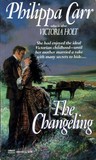
ISBN: 0449146979
Publisher: Ivy Books
Year: 1990
Length: Variable Print
The Changeling (Daughters of England, #15)
Synopsis & Analytical Review Framework
The ongoing discourse surrounding publications often highlights the delicate balance between accessible storytelling and technical complexity. In analyzing The Changeling (Daughters of England, #15), written by Philippa Carr, we find an exploratory framework that holds a steady 3.97 rating baseline. It is a work that sparks varied critical interpretations, making it a worthy addition to any modern reading index.
Rebecca Mandeville The story of The Changelingis told by Angelet's daughter, Rebecca, who was born in Benedict Lansdon's grandfather's house in an Australian gold-mining township. Before Rebecca was born, her father had died saving another man's life. She had always looked up to him as a great hero and when she heard that her mother was to marry Benedict Lansdon, she was deeply shocked. The prolific British author of historical romances (The Pool of St. Branok) continues her lavishly entwined narrative of the families connected to Benedict Lansdon, now a recently bereaved widower, absentee father and wealthy seeker of a Parliament seat. Narrated by Benedict's aggrieved stepdaughter, Rebecca, this complex tale of love and betrayal concerns a three-cornered sibling relationship involving Rebecca, her half-sister, Belinda, and Lucie, a country waif informally adopted by Rebecca. Aware that her father blames her for her mother's death in childbirth, Belinda takes refuge in michievous behavior. Placid Lucie, however, fits in well with the family, though her lineage is suspect and clouded with mysterious events at St. Branok's pool. Although Belinda seems the most obvious "changeling", Carr sustains an air of doubt and intrigue. The ambience of the Cornish countryside and of Victorian London permeate this piquantly Gothic family saga.
To summarize this critique, The Changeling (Daughters of England, #15) stands as a clear testament to Philippa Carr's ongoing dedication to mapping out complex narrative themes. By securing its unique position within the classification track, the text provides a robust analytical blueprint that will undoubtedly inform future discussions in this field.
Reader Critical Response Manifest
It is not too difficult to guess who the "changeling" is, but knowing in advance does not spoil the satisfaction of seeing what direction things take. Set in Victorian London and Cornwall.
One of my favorite books from high school, this is the story of childhood sweethearts from Cornwall, a suitably dramatic setting for this gothic tale! This book has everything: deaths, ghosts, babies switched at birth, ravishments in old castles . . . and yet it's all very demurely done. I liked that quite a bit, it was very reminiscent of something like Wuthering Heights or Jane Eyre. Affairs and other scandalous matters were spoken of with veiled comments and euphemisms that were in keeping with the time period. The mysteries (there are a couple) are well done, as are the romances (there are a couple of those, too).
*** "The Changeling" by Philippa Carr aka Victoria Holt is an old-fashioned kiss-less romance in Victorian England, entangled in servant gossip and rising political ambition, with children and adults who can behave both well and ill. I had heard of Rebecca de Mandeville, but mistakenly connected with the story called Rebecca. Becca is born in Australia in the same fine house as Pedrek, and when her father dies saving his in a mine accident, both grow up in Cornwall, childhood sweethearts. I do not think I have read the story before, just that the author leaves pointed clues so we are ahead of the characters to decipher a mysterious adoption, attack, and disappearance.
Correlated Literary Frameworks
No correlated reference modules mapped for this specific print matrix index.