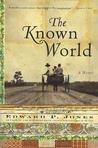
ISBN: 096513671X
Publisher: Amistad/HarperCollins
Year: 2003
Length: 388 Pages
The Known World
Synopsis & Analytical Review Framework
Every literary era is defined by works that attempt to challenge or document current human experiences. The Known World by Edward P. Jones enters the domain with an intriguing premise, balancing diverse structural viewpoints to achieve a stable 3.82 average review score. Spanning approximately 388 pages of text, this edition invites analytical minds to break down its narrative mechanics and conceptual layout.
One of the most acclaimed novels in recent memory, The Known Worldis a daring and ambitious work by Pulitzer Prize winner Edward P. Jones. The Known Worldtells the story of Henry Townsend, a black farmer and former slave who falls under the tutelage of William Robbins, the most powerful man in Manchester County, Virginia. Making certain he never circumvents the law, Townsend runs his affairs with unusual discipline. But when death takes him unexpectedly, his widow, Caldonia, can't uphold the estate's order, and chaos ensues. Jones has woven a footnote of history into an epic that takes an unflinching look at slavery in all its moral complexities.
Ultimately, the broader cultural and intellectual impact of The Known World lies in its ability to foster continued dialogue long after the final page is turned. Edward P. Jones has successfully assembled a distinct print architecture that elevates the current standards of writing. For those seeking an immersive intellectual framework, this volume remains a highly recommended discovery.
Reader Critical Response Manifest
2.5-stars, really. here is a perfect example of a books i should love, and yet.... i didn't. the book was a lot of work and, for me, very little reward. i think most of my issues are because of the style/structure of the novel: * the third-person, omniscient narrator - this was distracting from very early on in the read. i held off judging it. i wanted to trust jones and his choice. * non-linear narrative - i don't tend to have problems with this at all, but i found it super-clunky here. also distracting. * the made-up references - jones would cite sources and details that seemed to lend such an air of gravitas, but none of it is actually real. (i know, i know. this is fiction. a novel. get over it. but it was just kinda weird to me. social commentary inserted into fiction happens. steinbeck did it. teju cole does it. many writers do this. i felt like jones did a crap-ton of research for this book. but then i read this NPR piece. in it, he notes he collected 2 shelves worth of books on slavery... "but never got around to reading them". so this just added to my 'what the?' on the references in the novel and jones' research.) * all of this combined for a really awkward flow, and convoluted storytelling. i felt like it could lose 50-100 pages and be a tighter, better story. in case you think maybe i am a lazy reader - i'm not, i swear! i love nothing more than a meaty, tough read. jones' story is definitely both of these things. he explores the issue of free black people owning slaves in virginia, and he gives us a large cast of active characters. but it all felt so... surface-y. we get the actions and reactions, but we don't really get the motivations or emotions. jones is navigating a morally dodgy landscape, one i would have loved to have gone into more deeply. we are given the horrors and the heartbreaks, but it all felt so detached. and, you know, maybe that is totally on purpose. maybe, for some people, detachment is the only way through such a horrible time in history. jones has collected some serious critical acclaim and recognition over his career. to name a few: he's won the pulitzer, the national book critic's circle award, the PEN/Hemingway award, a MacArthur genius grant, and the International IMPAC dublin literary award. he's won nearly $1 million in literary awards alone. the man knows what he's doing, and the respect he's earned is fairly universal. the known world is an important story. but is just shining the light on the issues jones raises enough? so now i am back to the should. i should love this book. (it was just okay for me.) people should read this book. (indeed. but this is not a book i will blanket recommend to all.) so, i don't know you guys. i am bummed over this one. and this is a terrible review/collection of thoughts. maybe i'll become more coherent with some distance and fix this up a bit - but for now i wanted to note down something here. (aside #1 (going to be a bit spoiler-y here): moses confused me. or, rather, his turn to all-of-a-sudden being an asshole was weird. we're going along with moses. he seems like a lovely man. then, halfway into the book, he's a wife-beater, jerkface? where did that come from, and why was he presented like that? the reveal of moses being a not nice man was sudden and odd.) (aside #2: worth noting (was hugely interesting to me) - the cover photo of this edition is (c) Eudora Welty! i had no idea about her photographic prowess.)
Correlated Literary Frameworks
No correlated reference modules mapped for this specific print matrix index.